
The ferries are the heart and the heartbeat of fjord life. For many of us who live here, the ferry is the only way to home, work or family. On the ferries you can meet your neighbours and colleagues, and you can relax a bit before driving further on narrow roads across the landscape.
Ferries are the heart and the heartbeat of Fjord Norway
To understand the people of Fjord Norway, you must understand the ferries. 67 ferry routes in the region connect villages on different sides of the fjords, islands, and communities.

©Dag Ulvedal / Visit Nordfjord
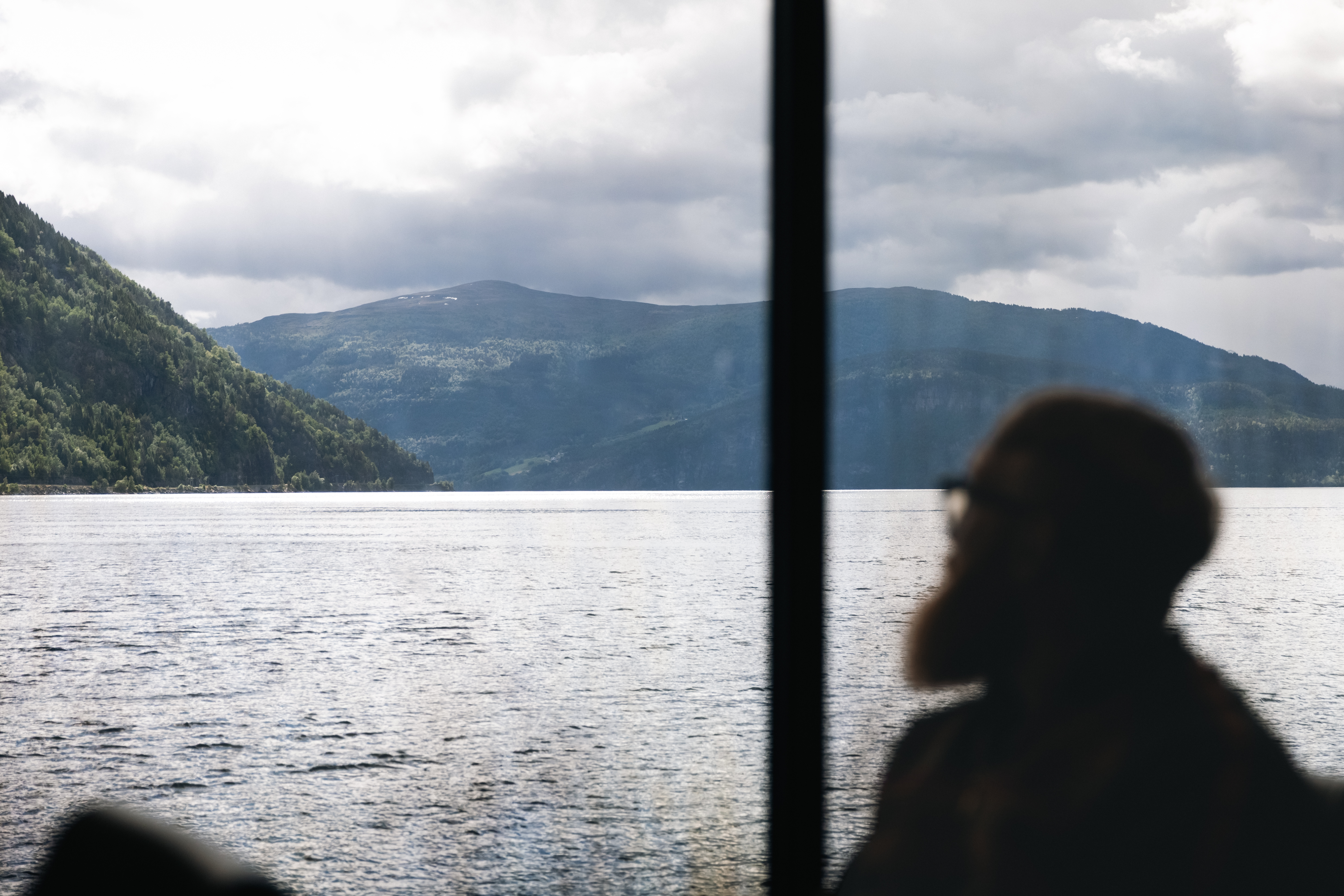
On the ferry you get time to see the landscape you otherwise just drive through @ Dag Ulvedal / Visit Nordfjord
A life on the fjord
Kjell Inge Mundal knows this better than most. He has been sailing for Fjord1 since the 1980s. More than four decades later, he still reports to the bridge of M/F Eidsfjord on the Lote–Anda crossing in Nordfjord.
“This is my office,” he says, gesturing towards the panoramic windows, the silent fjord and the mountains beyond. On clear days with snow on the peaks and sun on the water, he sends photos to friends and family back home. They are rarely surprised.
Coffee and a special treat
The Lote–Anda crossing takes around 11–12 minutes and saves drivers more than 100 kilometres of inland detour. But for the people who take it every day, farmers, schoolchildren, businesspeople, it is something more than a shortcut. It is a ritual. And like all good rituals, it has its rules: “You buy a coffee, you buy a svele,” Mundal smiles.
The svele is a Norwegian pancake, soft and slightly thick, best eaten with butter and sugar, or with Norwegian brown cheese, a caramelised cheese speciality from Norway.
On ferries across western Norway, it is as essential as the life jacket or the motor. Freshly delivered from a local bakery or baked on board, it has become the unofficial symbol of the ferry experience, the thing every visitor should try at least once, ideally while watching a fjord slide past the window.
Ferry captain Mundal appreciates the tourists. They slow down, he says. They look out the window. They are not in a hurry. In a region where the landscape changes every minute, the weather, the fjord, the waterfalls, dramatic peaks, that is exactly the right attitude.
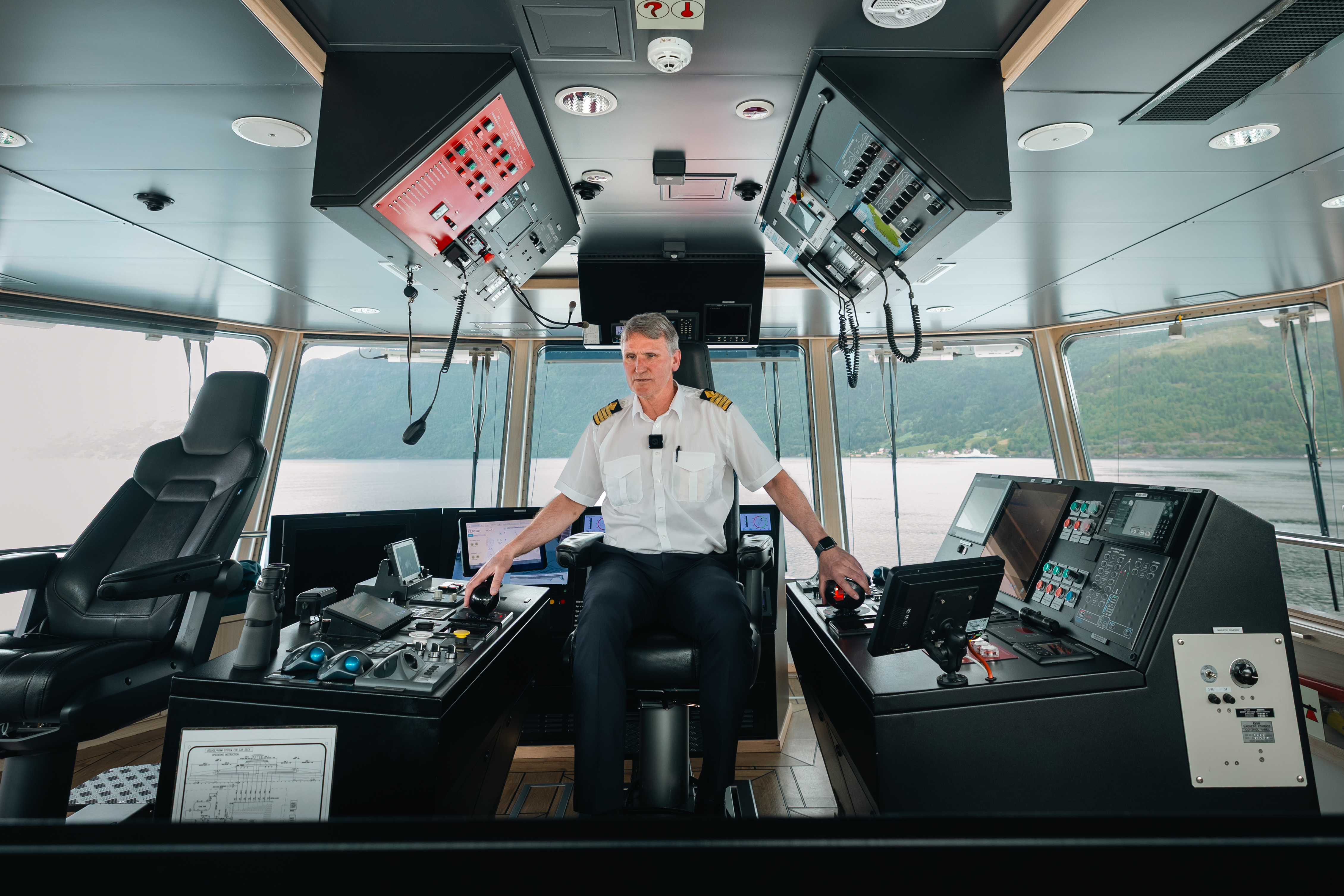
“This is my office,” says Kjell Inge Mundal, who has sailed for Fjord1 since the 1980s. @ Dag Ulvedal / Visit Nordfjord
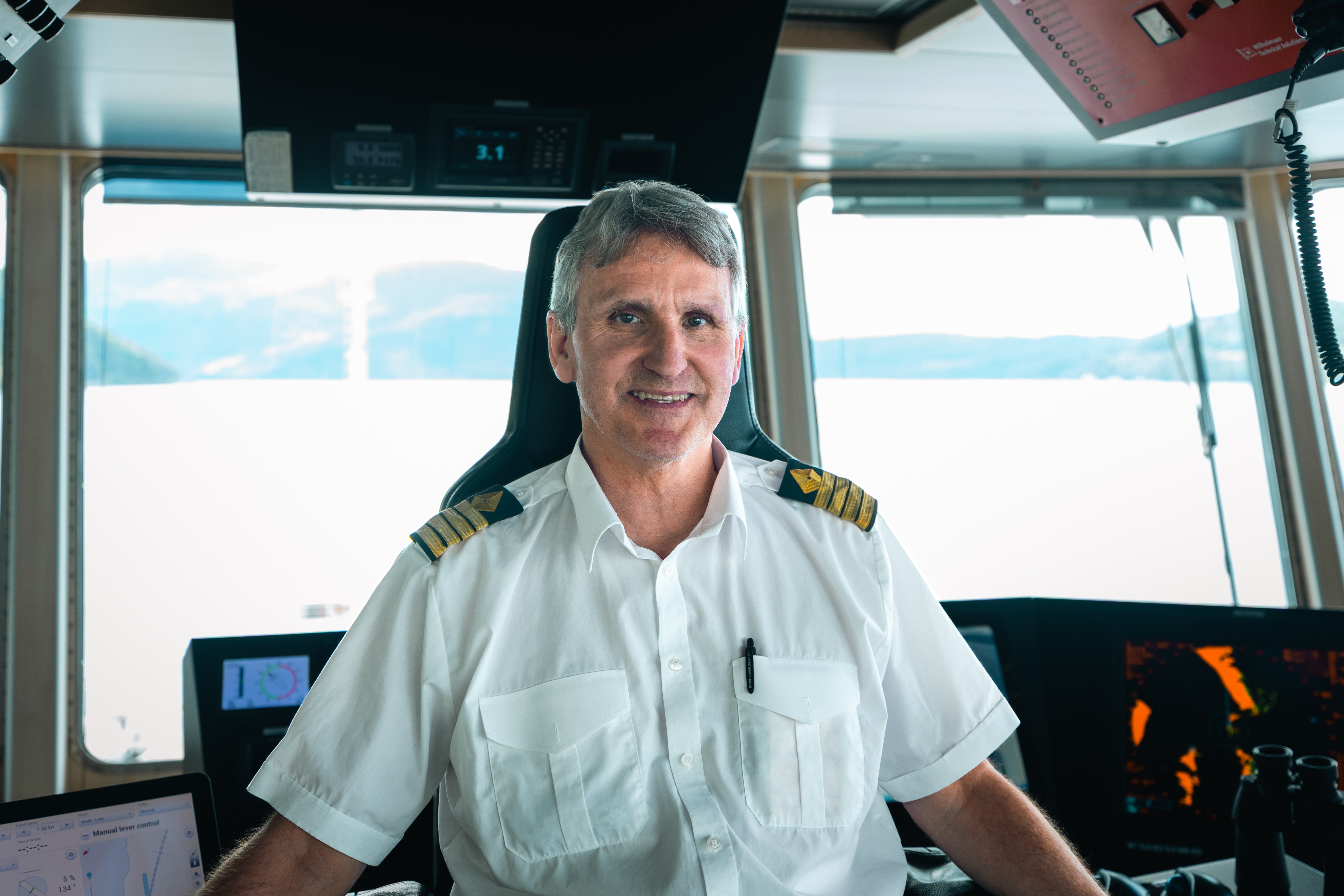
A svele and a coffee – those are the rules, according to Mundal. @ Dag Ulvedal / Visit Nordfjord
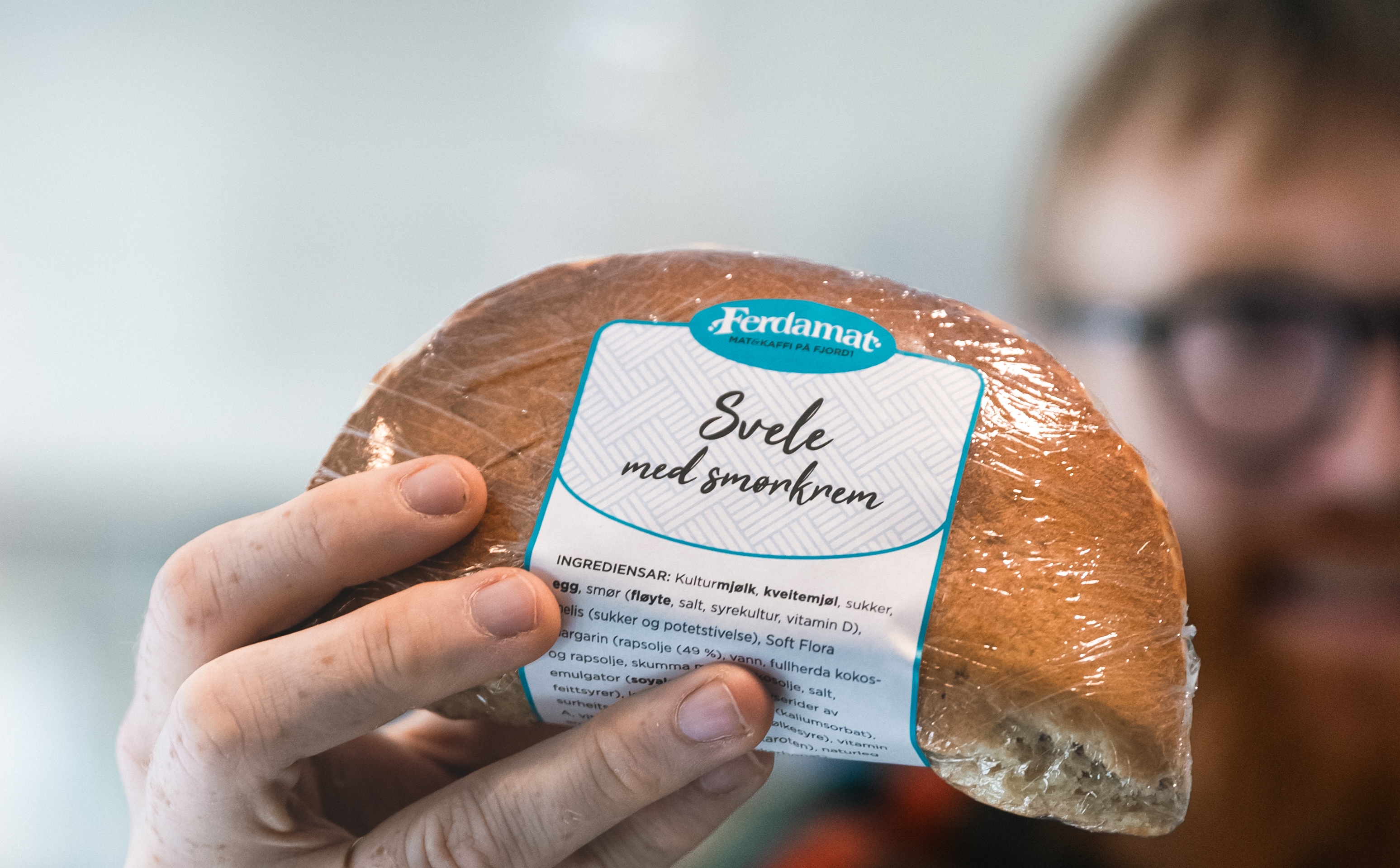
Fresh from the bakery. Svela is the unofficial symbol of the ferry experience. @ Dag Ulvedal / Visit Nordfjord
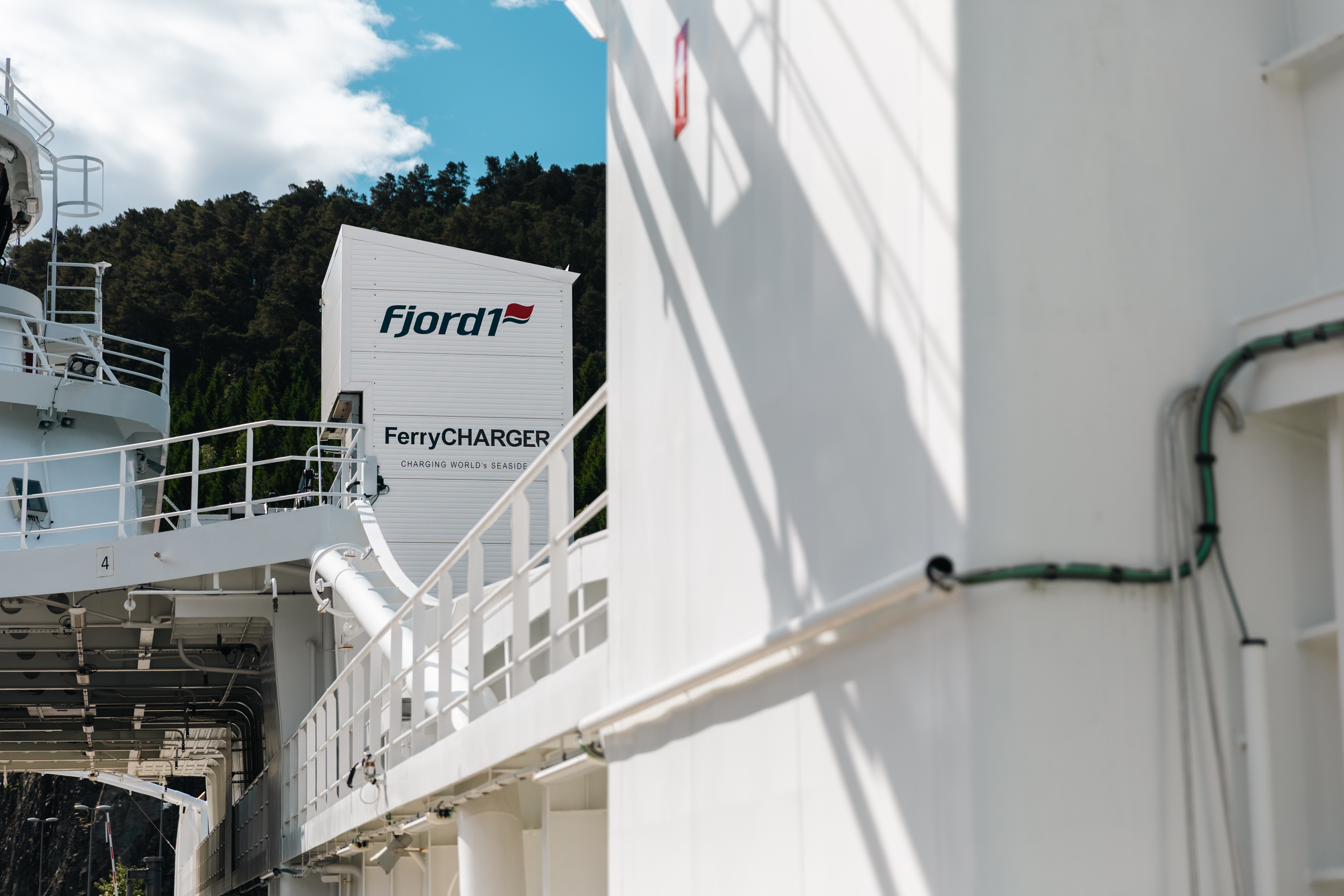
In the course of 7–8 minutes at the quay, M/F Eidsfjord collects enough energy for the next crossing. @ Dag Ulvedal / Visit Nordfjord
The quiet revolution below deck
On the car deck of M/F Eidsfjord, you would notice something unusual: silence. No diesel rumble. No smell of exhaust. Just the low hum of electricity and the occasional sound of water against the hull.
Ronny Kandal, the chief engineer, has worked this route for 25 years. He leads the way down to the engine room, a space that looks nothing like the oily, noisy machinery rooms of older ferries. The surfaces are clean. The air is fresh. Two large battery systems, each storing 520 kWh (1040 kWh in total), power everything from propulsion to lighting.
When the ferry docks, an automated vacuum mooring system locks it into place; no ropes, no manual work. Seconds later, a charging cable connects automatically. In the 7 to 8 minutes the ferry spends at the quay, it recovers enough energy for the next crossing and more. The system is precise, reliable, and almost entirely self-contained.
“A typical crossing uses between 60 and 80 kWh, depending on current and wind conditions in the fjord. The ferry can reach speeds of up to 13–14 knots when needed, though normal cruising speed is around 7.5 knots. Diesel backup engines remain on standby, but on most days, they are never needed,” Kandal says.
The Lote–Anda route became the world´s first fully electric ferry connection in 2018, a milestone in the country’s green maritime transition.
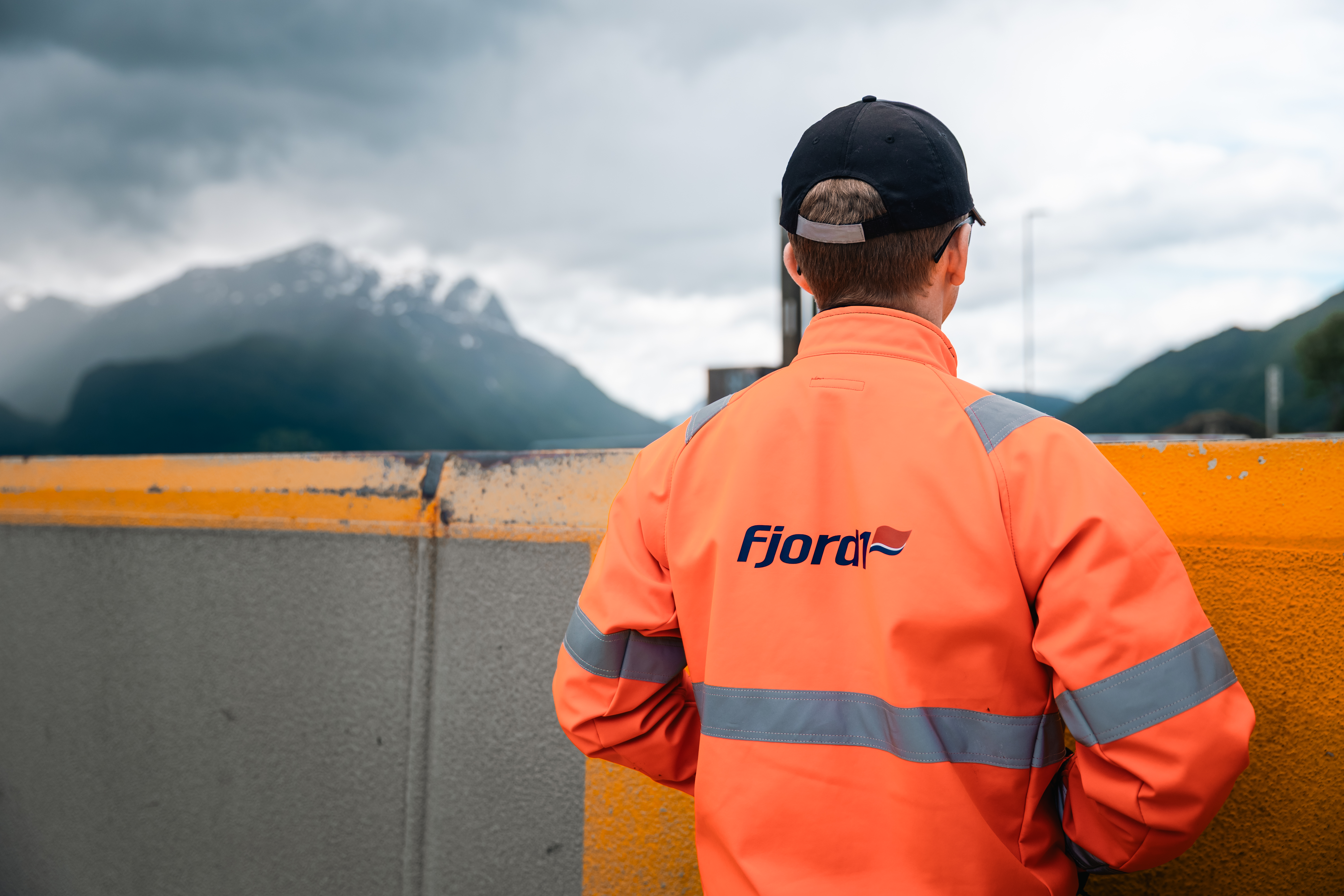
Lote–Anda became the world’s first fully electric ferry connection in 2018. @ Dag Ulvedal / Visit Nordfjord
Ferry etiquette rules
A few things worth knowing before you board:
- Follow the crew. Their signals and instructions keep everyone safe and the crossing on schedule. This goes especially for campervans: wait for guidance before manoeuvring on deck.
- Take your time. Check timetables in advance at 175.no and factor ferry crossings into your route planning.
- On deck: hold the handrails on stairs, watch for slippery surfaces in wet or icy conditions, and keep children and pets close at all times.
- In your car: engine off, handbrake on, external lights off, car alarm disabled. It’s safer for everyone, and spares the crew’s hearing.
- Leave no trace. Use the onboard waste facilities. The fjord is not a bin.
The ferries of Nordfjord run because people need them. Treat the crossing, and the crew, accordingly.