
Nordfjord is one of the longest fjords in Norway, stretching deep into the western landscape between mountain walls and glaciers. To cross it, you don’t take a bridge. You take a ferry. Three of them, in fact, are each a working part of daily life for the communities on either side.
106 kilometres of fjord. Three ferries. No bridges.
Nordfjord is 106 kilometers long, and three ferry connections link villages and local communities along the fjord. For those who live here, they’re part of everyday life — for visitors, they’re a journey with world-class views.

©Dag Ulvedal / Visit Nordfjord
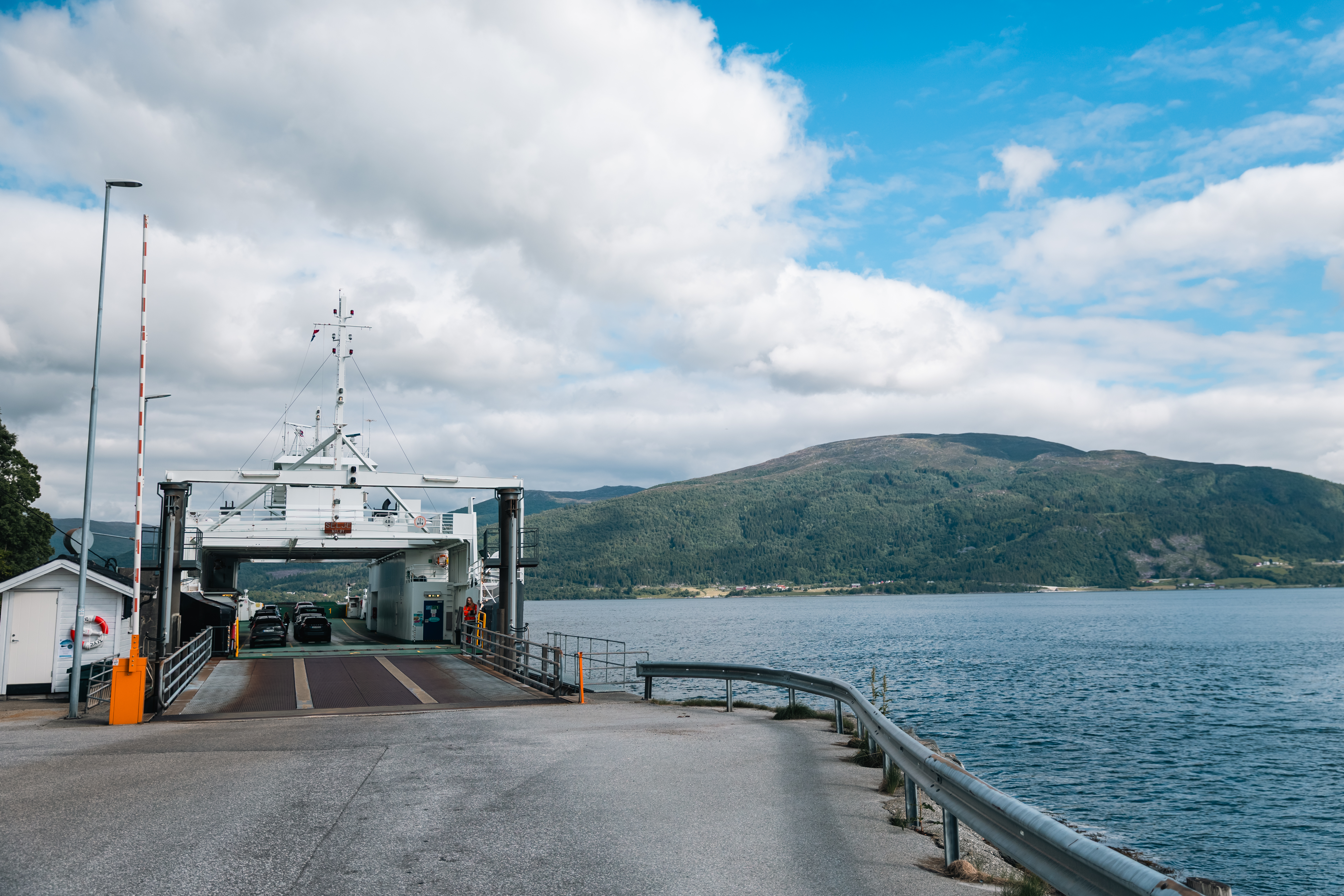
A quarter early morning and late afternoon, this connection is the lifeline for commuters in Nordfjord. @ Dag Ulvedal / Visit Nordfjord
A life on the fjord
Torbjørn Hatledal has been skipper on M/F Selje for four years, running the Stårheim–Isane crossing in the mid part of Nordfjord. He grew up in Stryn, trained as a nautical officer, and spent years working offshore before coming home to the fjord. The commute is short. The view is hard to beat.
“This route matters most early in the morning and late in the afternoon,” he says. “That’s when people are getting to work, getting home, getting on with their lives.” For commuters between Nordfjordeid, Bremanger and the surrounding municipalities, the ferry isn’t a scenic detour, it’s the only option.
M/F Selje is an older vessel, built in the traditional style with a rudder and propeller at each end. She handles the fjord conditions the old-fashioned way: reliably, in all weathers, including the sharp gusts that funnel down from the surrounding peaks without much warning.
From November 2027, all ferry connections in Sogn og Fjordane will run on electric power. Fjord1 is currently converting its fleet, with the Stårheim–Isane and Måløy–Oldeide crossings going fully electric. Emissions will fall by 70 to 95 percent compared to today. The Lote–Anda crossing, the world's first fully electric ferry connection when it launched in 2018, showed the way.
On shore and into the landscape
Captain Hatledal knows the area well, and his tips go beyond the crossing itself. Bremanger is worth a stop, he says. The village of Kalvåg on the outer coast is beautiful. On the way, enjoy the view of Hornelen, the highest sea cliff in Europe, or go hiking.
Hornelen rises dramatically from the sea and surprised him with how long the hike takes. For the more adventurous, via ferrata routes are available for those who want to earn the view. Gjegnen and Ålfotbreen offer serious terrain for experienced hikers.
His most recent recommendation: a trip to Vetvika in early June. Quiet, beautiful weather, and almost nobody else around.
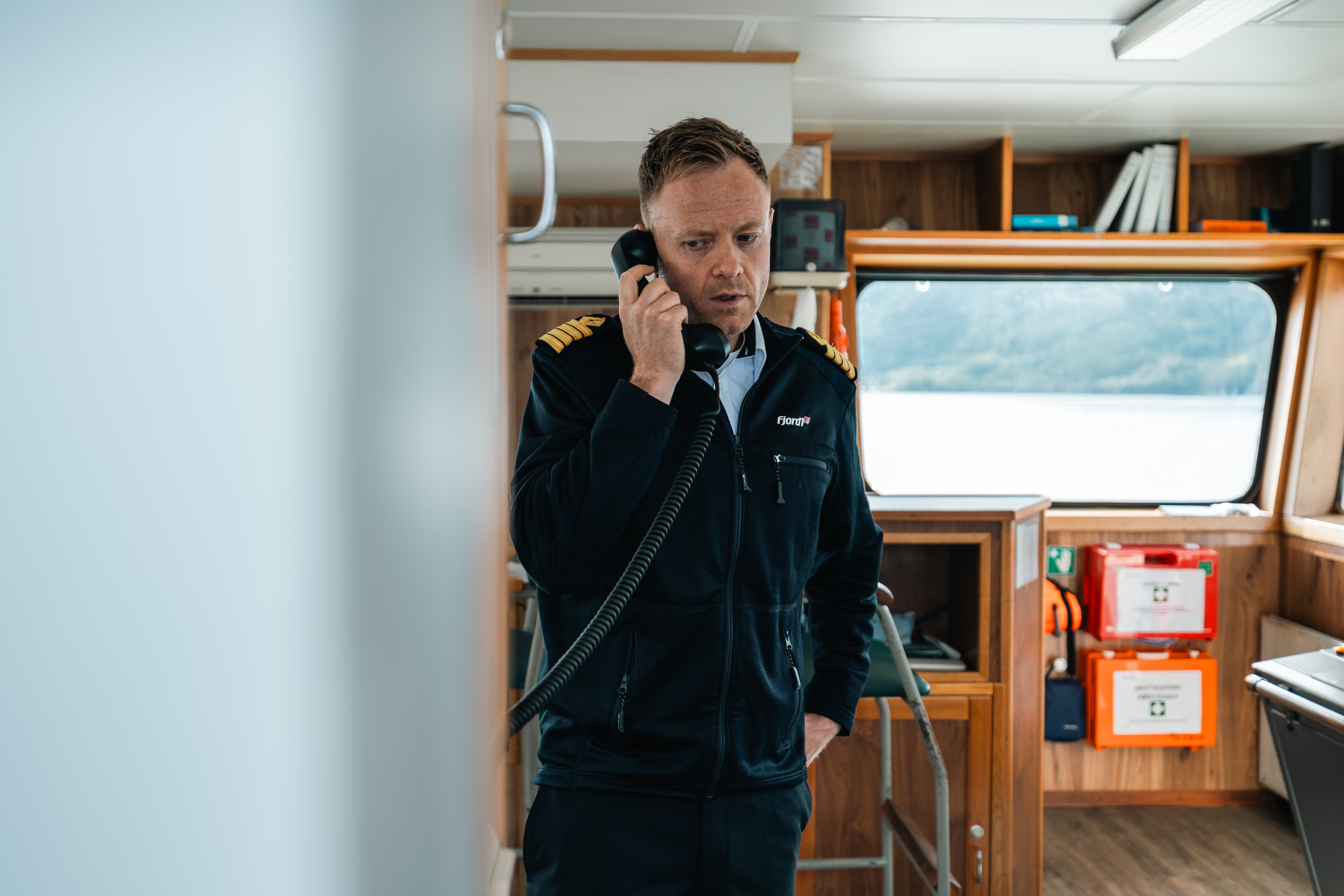
The view changes all the time – that’s one of the things Hatledal appreciates most about the job. @ Dag Ulvedal / Visit Nordfjord
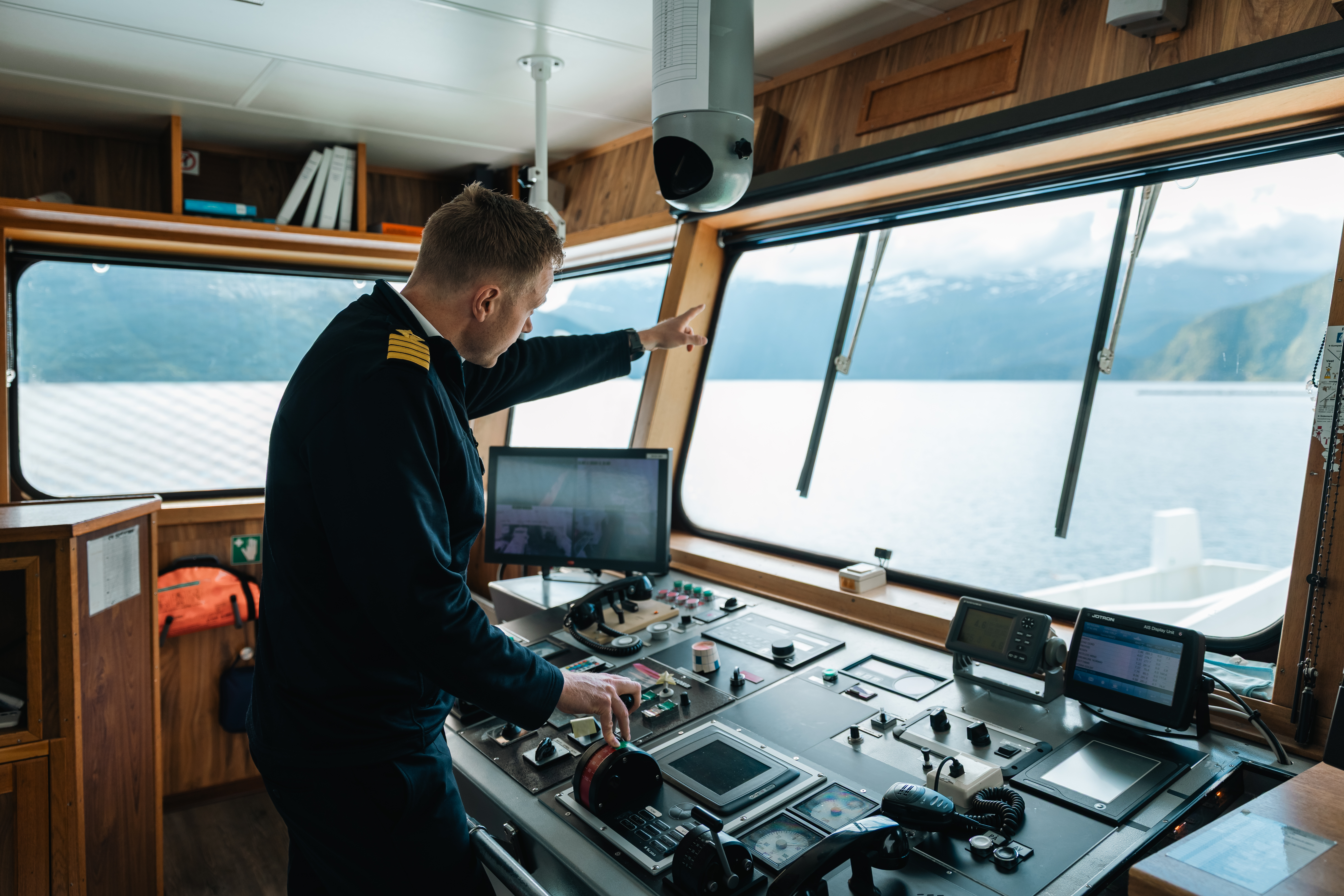
Torbjørn Hatledal grew up in Stryn, worked offshore – and came home to the fjord. @ Dag Ulvedal / Visit Nordfjord
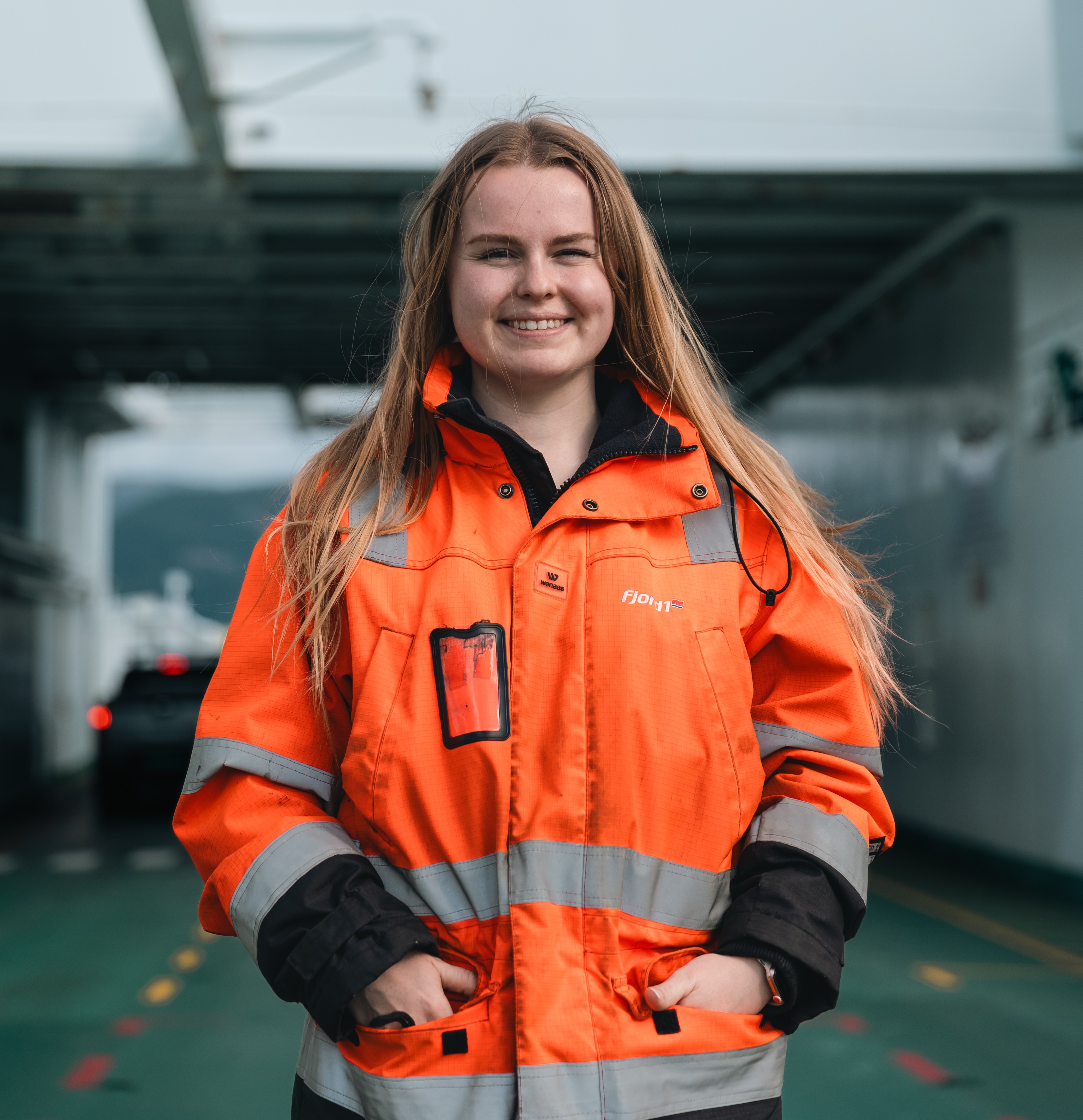
The crew are both your guides and responsible for safety – listen to them when you are on board. @ Dag Ulvedal / Visit Nordfjord
Your ferry guide
A few things worth knowing before you board:
- Follow the crew. Their signals and instructions keep everyone safe and the crossing on schedule. This goes especially for campervans: wait for guidance before manoeuvring on deck.
- Take your time. Check timetables in advance at 175.no and factor ferry crossings into your route planning.
- On deck: hold the handrails on stairs, watch for slippery surfaces in wet or icy conditions, and keep children and pets close at all times.
- In your car: engine off, handbrake on, external lights off, car alarm disabled. It’s safer for everyone, and spares the crew’s hearing.
- Leave no trace. Use the onboard waste facilities. The fjord is not a bin.
The ferries of Nordfjord run because people need them. Treat the crossing, and the crew, accordingly.
The ferries of Nordfjord run because people need them. Treat the crossing, and the crew, accordingly.